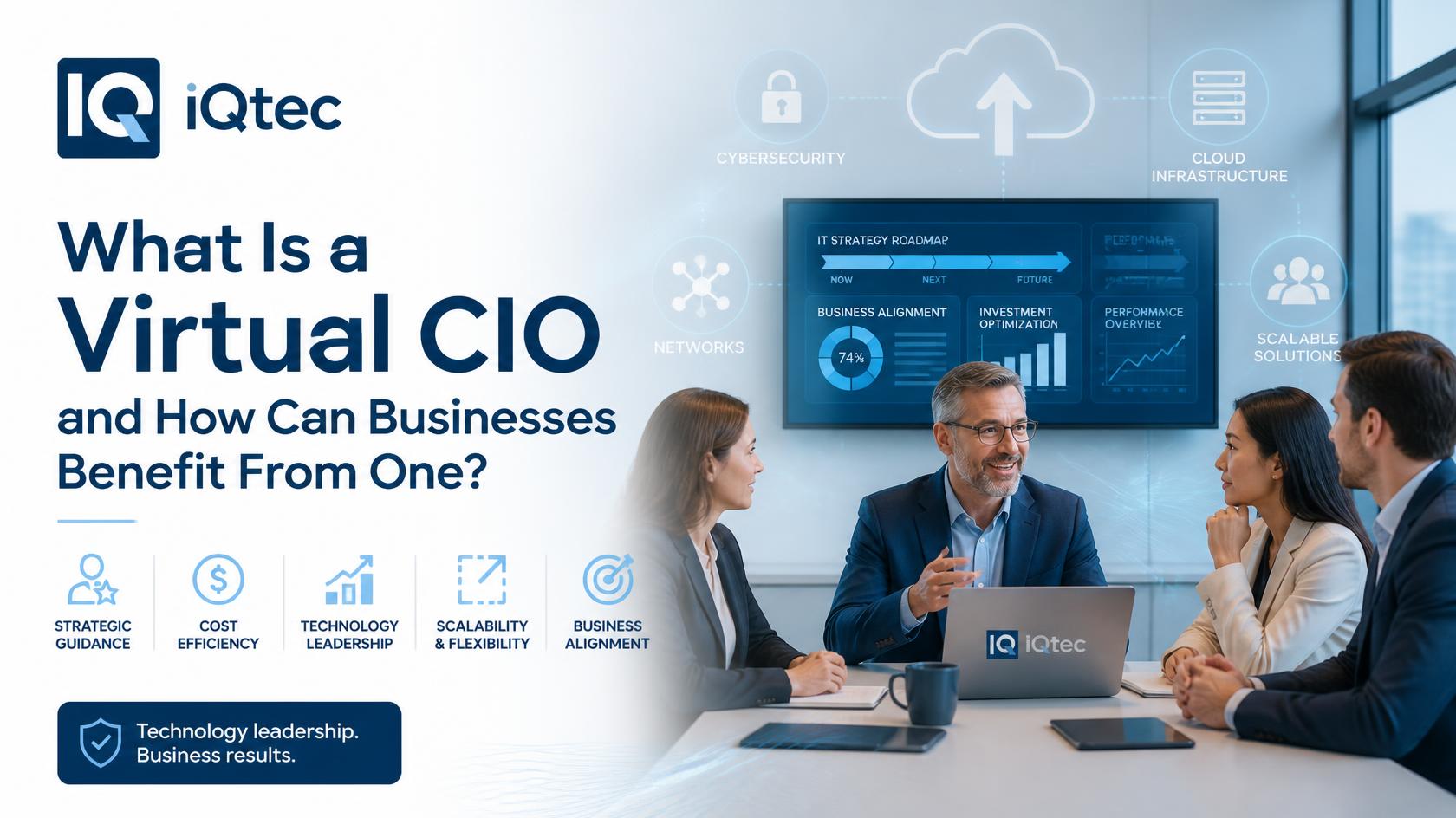
Technology decisions can become difficult when your business is growing but you do not have a senior technology leader available every day. A Virtual CIO provides strategic IT guidance without requiring you to employ a full-time Chief Information Officer. Instead of focusing only on day-to-day technical problems, the role connects technology decisions with business goals, budgets, security, and future plans.
For a small or mid-sized organisation, this can fill an important gap. You may have technicians handling user support, Microsoft 365 administration, cybersecurity, cloud systems, and hardware, but who decides what should happen next? A senior technology adviser can help answer that question.
A Virtual CIO acts as a strategic technology adviser. The exact responsibilities vary between providers, so you should always ask for the current scope of services in writing.
Rather than replacing your existing IT support team, the role can sit above daily technical work. It focuses on questions such as whether your current systems are suitable, where technology spending should go, and which risks deserve attention first.
Typical responsibilities can include:
-
Creating and reviewing an IT strategy
-
Planning technology budgets and major purchases
-
Reviewing cybersecurity risks
-
Assessing cloud and infrastructure requirements
-
Establishing technology priorities
-
Supporting compliance planning
-
Reviewing vendors and technology contracts
-
Preparing for business growth or major technology changes
The value is not simply having another person to call. It is having someone who can look at technology decisions from a business perspective.
A common problem appears when a business reaches a certain level of complexity. The IT environment may have grown through individual purchases rather than one long-term plan.
You might have different cloud applications, ageing computers, several software subscriptions, inconsistent security controls, and no clear replacement schedule. Everything may still work, but the cost and risk are harder to understand.
Hiring a full-time CIO may not make financial sense for a smaller organisation. A Virtual CIO can provide access to senior-level planning and advice without necessarily creating the cost of another full-time executive position.
That distinction matters. You are paying for strategic input that fits your requirements rather than creating an executive role simply because the business has outgrown informal IT decision-making.
Technology spending becomes easier to control when purchases follow a plan.
For example, instead of replacing 40 computers only after they start failing, you can establish a device lifecycle schedule. You might plan replacements in groups based on age, warranty status, performance, and business need.
The same principle applies to servers, networking equipment, software licences, cloud services, and cybersecurity controls.
A senior IT adviser can help you separate urgent spending from important long-term investment. That can prevent a common mistake: spending heavily on whatever problem is most visible while more serious risks remain unattended.
IT strategy should reflect how your organisation actually operates.
If you plan to open another office, add remote employees, introduce a new business application, or acquire another company, technology requirements should be considered early. Network capacity, identity management, device deployment, licensing, data access, and security can all affect the project.
This is one reason Virtual CIO services can be useful for growing businesses. Instead of treating technology as a separate department, strategic IT planning considers how systems affect employees, customers, costs, and business operations.
Ask yourself a simple question: if your business doubled in size over the next three years, would your current IT environment cope?
If the answer is uncertain, strategic planning is probably overdue.
Cybersecurity should not be treated as a collection of individual tools.
A strategic IT adviser can help you look at the wider picture, including MFA, administrator privileges, endpoint protection, backups, patching, employee access, incident response, and security policies.
Backup arrangements deserve particular attention. A backup that has never been restored successfully should not be treated as a proven recovery plan. Regular restoration tests can reveal problems before an actual incident occurs.
You can also review whether former employees still have active accounts, whether administrator access is limited, and whether important systems have appropriate recovery procedures.
These checks are practical, not theoretical. A single overlooked account or failed backup can create a much larger problem later.
Not every provider offers the same level of strategic involvement.
Before signing an agreement, ask how often strategy meetings occur, what reports you receive, who performs technology reviews, and whether the adviser participates in major purchasing decisions.
You should also clarify how the role works with your existing IT support team. If another provider handles daily support, responsibilities need to be clearly defined.
Useful questions include:
-
What will be reviewed during the first 90 days?
-
How are IT priorities decided?
-
Will you receive a written technology roadmap?
-
How are IT risks recorded and ranked?
-
Does the adviser review vendor agreements and technology spending?
-
What happens when a major incident or urgent decision requires senior input?
Good answers should be specific. Be cautious of a service that promises “strategic guidance” without explaining what that means in practice.
A Virtual CIO is an external technology adviser who provides strategic IT leadership without necessarily being employed as a full-time Chief Information Officer.
No. Small and mid-sized organisations often use the service because they may need senior IT guidance without a full-time CIO. Larger organisations can also use external strategic support for specific requirements.
Usually, the roles are different. IT support focuses more heavily on operational technology issues, while the CIO function focuses on strategy, planning, risk, budgets, and long-term technology decisions.
There is no universal schedule. Monthly strategy meetings may suit some organisations, while businesses going through major projects may need more frequent involvement. Ask for the meeting schedule and deliverables before signing.
Depending on the agreement, deliverables may include an IT roadmap, budget planning, risk reviews, technology recommendations, project oversight, vendor reviews, and regular management reports. Confirm the exact scope in writing.