As businesses become increasingly dependent on technology, having reliable IT support is no longer optional. From maintaining secure networks to supporting remote work and protecting sensitive data, IT plays a vital role in daily operations. When deciding how to manage technology, many organisations compare managed IT vs in-house IT team options to determine which approach best aligns with their goals, budget, and growth plans.
Both models offer unique advantages, but the right choice depends on your business requirements, available resources, and long-term strategy. Understanding the differences can help you invest in an IT solution that supports efficiency, security, and future growth.
Managed IT vs In-House IT Team: Understanding the Difference
Before making a decision, it is important to understand how each approach works.
An in-house IT team consists of employees who work directly for your organisation. They manage daily technical support, maintain hardware and software, monitor systems, and resolve IT issues internally.
Managed IT services involve partnering with an external technology provider that manages your IT environment through ongoing monitoring, maintenance, cybersecurity, cloud support, and strategic consulting. Instead of waiting for problems to occur, managed service providers focus on preventing issues and improving overall technology performance.
Benefits of an In-House IT Team
An internal IT department can provide several advantages for businesses with the right resources and requirements.
Greater Business Knowledge
Internal IT professionals develop a strong understanding of company systems, processes, and workflows. This familiarity allows them to provide solutions that are closely aligned with business operations.
Immediate On-Site Support
Having IT staff within the organisation means employees can receive direct assistance with technical problems, hardware issues, and system requirements.
Direct Control Over IT Operations
Businesses have complete control over their IT priorities, projects, and processes. This can be beneficial for organisations with highly specialised technology environments.
Challenges of an In-House IT Team
Although an internal team provides control and familiarity, it also comes with additional responsibilities. Hiring skilled IT professionals can be expensive, especially when businesses need expertise across multiple areas such as cybersecurity, cloud computing, networking, and compliance.
Small internal teams may also struggle to provide continuous support, particularly during staff shortages, holidays, or periods of rapid business growth.
Benefits of Managed IT Services
Managed IT services provide businesses with access to professional technology support without the need to build a large internal department.
Access to Specialist Expertise
A managed service provider gives businesses access to a team of professionals with experience across multiple technology areas, including cybersecurity, cloud platforms, network management, data protection, and digital transformation.
Proactive IT Support
Unlike traditional break-fix support, managed IT providers continuously monitor systems, identify potential issues, apply updates, and maintain infrastructure to reduce downtime.
This proactive approach allows businesses to focus on daily operations while technology experts manage their IT environment.
Predictable Technology Costs
Managing an internal IT team involves salaries, benefits, training, certifications, and software expenses. Managed services typically use a predictable monthly pricing model, making it easier for businesses to plan their technology budgets.
Improved Cybersecurity
Cyber threats are constantly evolving, and businesses need strong protection to secure sensitive information. Managed service providers help implement security measures such as endpoint protection, backup solutions, threat monitoring, access controls, and security updates.
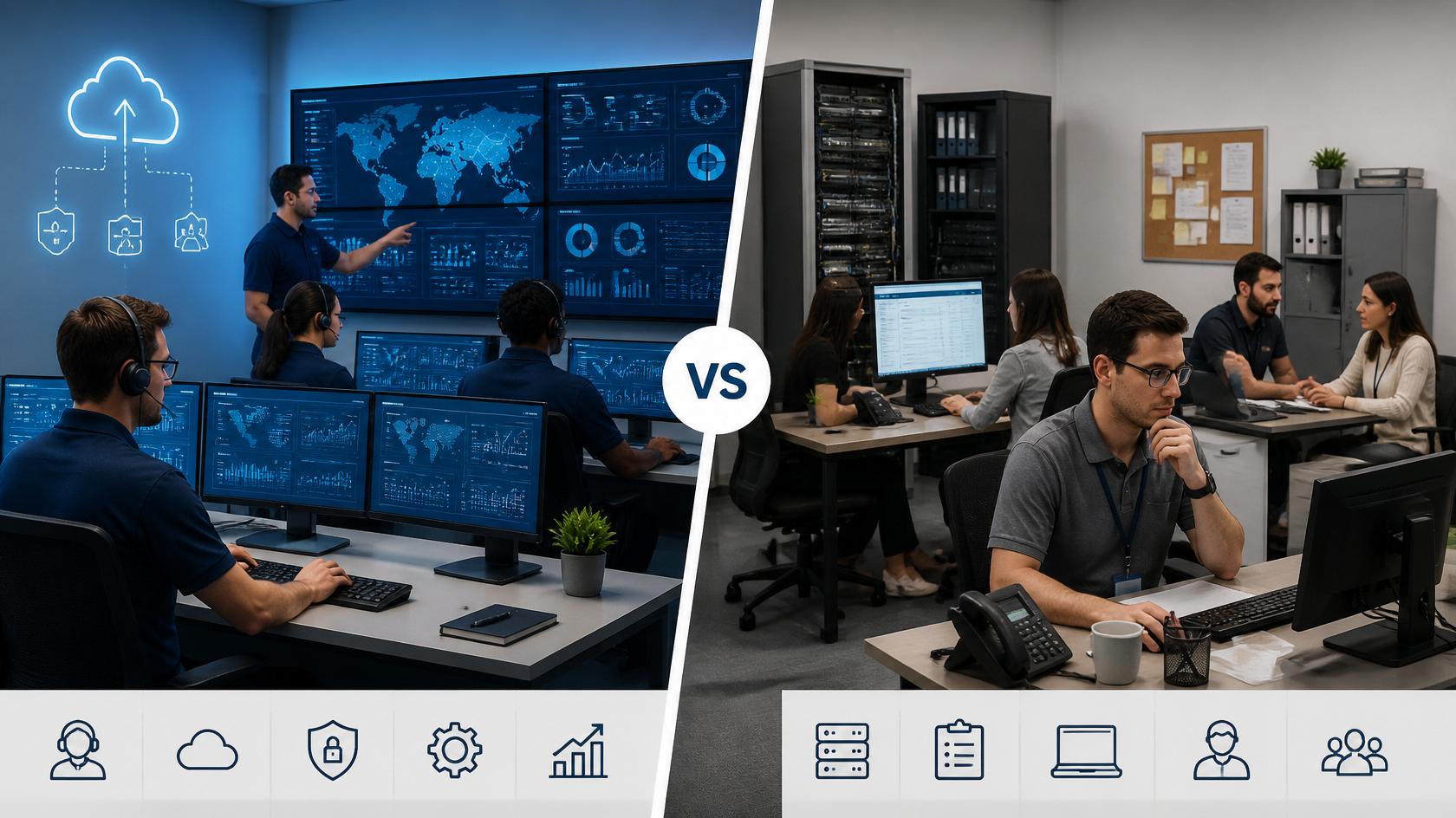
Managed IT vs In-House IT Team: Key Differences
| Feature | Managed IT Services | In-House IT Team |
| Cost | Predictable monthly investment | Higher costs for hiring and maintaining staff |
| Expertise | Access to multiple IT specialists | Limited to internal team knowledge |
| Support | Proactive monitoring and maintenance | Often focused on immediate issues |
| Cybersecurity | Dedicated security tools and expertise | Depends on internal resources |
| Scalability | Easily adapts to business growth | Requires additional hiring |
| Technology Strategy | Includes consulting and planning support | Depends on internal capabilities |
Which Option Is Right for Your Business?
The best IT approach depends on your organisation’s size, objectives, and technology requirements.
Small and medium-sized businesses often choose managed IT services because they can access experienced professionals without the expense of creating a large internal department. This allows them to improve security, increase productivity, and scale technology as their business grows.
Larger organisations may prefer maintaining an internal IT team while using external providers for specialised areas such as cybersecurity, cloud migration, disaster recovery, and strategic technology planning.
A co-managed IT approach can also be effective, allowing businesses to combine internal knowledge with external expertise.
Why Businesses Choose Managed IT Services
Technology requirements continue to become more complex, and businesses need reliable solutions to remain competitive. Managed IT services help organisations reduce downtime, strengthen security, and improve operational efficiency.
By working with an experienced technology partner, businesses gain access to advanced tools, industry expertise, and strategic guidance without the challenges of managing every IT function internally.
For organisations looking to improve their technology environment, a managed service provider can offer the flexibility and support needed to adapt to changing business demands.
Final Thoughts
Choosing between managed IT vs in-house IT team is not about finding a universal solution—it is about selecting the approach that best supports your business goals.
An in-house IT team may be suitable for organisations that require dedicated internal resources and complete control over technology operations. However, managed IT services can provide significant advantages for businesses seeking predictable costs, specialised expertise, stronger cybersecurity, and scalable support.
By carefully assessing your current needs and future objectives, you can choose an IT strategy that keeps your business secure, productive, and prepared for future growth.
Frequently Asked Questions (FAQs)
1. What is the difference between managed IT services and an in-house IT team?
Managed IT services are provided by an external technology partner that manages your IT infrastructure, security, and support. An in-house IT team consists of employees who handle technology operations within the organisation.
2. Is managed IT more cost-effective than hiring an in-house IT team?
For many small and medium-sized businesses, managed IT services can be more cost-effective because they provide access to technical expertise without the expenses associated with hiring, training, and maintaining a large internal team.
3. Can managed IT services replace an internal IT department?
Yes. Some businesses completely outsource their IT management, while others use a co-managed approach where an external provider works alongside their internal IT team.
4. Which businesses benefit most from managed IT services?
Businesses that need reliable support, improved cybersecurity, proactive monitoring, and scalable technology solutions often benefit from managed IT services. They are especially useful for organisations without extensive internal IT resources.
5. How do I decide between managed IT and an in-house IT team?
The decision depends on factors such as business size, budget, technical requirements, security needs, and future growth plans. Businesses should evaluate which approach provides the right balance of control, expertise, and cost efficiency.
6. Do managed IT providers help with cybersecurity?
Yes. Many managed service providers offer cybersecurity solutions such as threat monitoring, data backups, endpoint security, vulnerability management, and security planning to help businesses protect their systems and information.