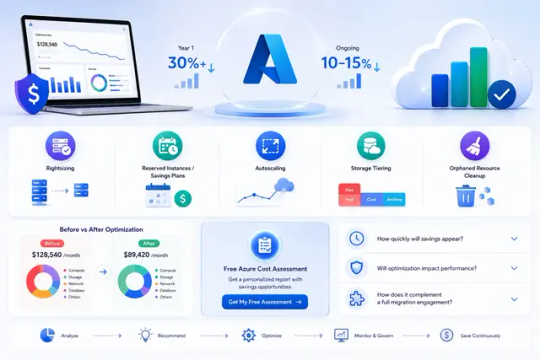
As businesses continue to embrace cloud computing, Microsoft Azure has become a trusted platform for hosting applications, managing workloads, and driving digital transformation. While Azure offers flexibility and scalability, cloud costs can quickly escalate without proper monitoring and governance. Overprovisioned virtual machines, idle resources, and inefficient storage strategies often lead to unnecessary spending.
Azure Cost Optimization is the ongoing process of aligning cloud spending with actual workload requirements. Instead of treating cost reduction as a one-time exercise, organizations adopt continuous optimization practices that improve resource efficiency, eliminate waste, and maximize the return on their cloud investment.
Why Azure Cost Optimization Matters
Cloud environments are constantly evolving. New workloads are deployed, applications scale up or down, and development environments are created for testing. Without continuous monitoring, businesses often end up paying for resources they no longer need.
Industry data highlights the impact of effective cloud cost management:
Metric Business Value
Up to 40% Typical first-year infrastructure cost reduction through Azure Cost Optimization
10–15% Ongoing year-over-year savings with continuous FinOps governance
30%+ Average cloud spend typically wasted due to underutilized or idle resources
30 Days Time required to complete an initial Azure cost assessment and identify optimization opportunities
These figures demonstrate why Azure Cost Optimization is no longer optional—it's an essential part of effective cloud management.
What Is Azure Cost Optimization?
Azure Cost Optimization is the practice of continuously evaluating Azure resources to ensure organizations pay only for what they actually use. It involves analyzing infrastructure usage, identifying inefficiencies, and implementing strategies that reduce costs while maintaining application performance and reliability.
Unlike a one-time cleanup project, cost optimization becomes significantly more effective when supported by ongoing FinOps governance, enabling businesses to monitor spending, optimize resources, and maintain financial control as cloud environments grow.
Six Proven Azure Cost Optimization Strategies
1.Rightsizing Resources
Many Azure virtual machines and databases are deployed with more CPU, memory, or storage than workloads actually require.
By analyzing utilization metrics, organizations can resize infrastructure to match actual demand. Rightsizing is often one of the fastest and most impactful ways to reduce cloud costs without affecting performance.
2.Reserved Instances and Savings Plans
Predictable, always-on workloads are ideal candidates for Azure Reserved Instances and Azure Savings Plans.
These pricing models provide significant discounts compared to pay-as-you-go pricing, allowing organizations to lower recurring infrastructure costs while maintaining operational flexibility.
3.Autoscaling and Scheduled Shutdowns
Not every workload requires full computing capacity around the clock.
Autoscaling automatically adjusts compute resources based on application demand, while scheduled shutdowns reduce costs for development, testing, and low-traffic environments during nights, weekends, and other off-peak periods.
4.Storage Tier Optimization
Azure offers multiple storage options, including Hot, Cool, and Archive tiers.
Moving infrequently accessed data to lower-cost storage while keeping business-critical data readily available helps organizations optimize storage expenses without compromising accessibility.
5.Orphaned Resource Cleanup
Unused cloud resources continue generating charges even when they no longer serve a business purpose.
Regularly identifying and removing unattached managed disks, idle public IP addresses, outdated snapshots, and decommissioned virtual machines provides immediate cost savings and improves overall cloud hygiene.
6.Governance and Resource Tagging
Effective cost optimization depends on visibility.
Resource tagging allows businesses to allocate cloud expenses by department, project, or application, while budget alerts help finance and IT teams detect unusual spending before invoices become a concern. Strong governance creates accountability and supports better financial decision-making.
A Continuous FinOps Approach
Long-term cloud savings require more than a one-time optimization project. A structured FinOps framework ensures Azure spending remains aligned with business goals through continuous monitoring and improvement.
A typical optimization lifecycle includes:
Step 1: Baseline Cost Assessment
Review Azure subscriptions, services, and resource groups to identify unused resources, oversized infrastructure, and optimization opportunities.
Step 2: Optimization Sprint
Implement high-impact improvements such as rightsizing, Reserved Instances, autoscaling, storage optimization, and resource cleanup.
Step 3: Monthly FinOps Reviews
Analyze Azure Cost Management reports, compare spending against budgets, identify anomalies, and adjust optimization strategies as workloads evolve.
Step 4: Quarterly Business Reviews
Provide finance and IT leadership with reports on cumulative savings, spending trends, and recommendations for future cost optimization initiatives.
This continuous approach ensures organizations maintain cost efficiency as their Azure environments expand.
Benefits of Azure Cost Optimization
Organizations that adopt continuous Azure Cost Optimization can expect:
- Lower monthly Azure infrastructure costs
- Improved resource utilization
- Greater visibility into cloud spending
- Sustainable long-term cost savings
- Better return on cloud investments
Instead of reacting to rising cloud bills, businesses gain proactive control over their Azure environment while supporting performance, scalability, and future growth.
Frequently Asked Questions
1.How quickly will we see savings from Azure Cost Optimization?
Savings can begin almost immediately. Orphaned resource cleanup and Reserved Instance commitments are often reflected in the next Azure invoice. Rightsizing and autoscaling initiatives are typically completed within 2–4 weeks, with many organizations achieving the majority of their first-year savings within 60–90 days.
2.Does Azure Cost Optimization affect application performance?
No. Every optimization recommendation is based on actual workload utilization and performance metrics. Rightsizing decisions are carefully validated before implementation, and autoscaling ensures applications automatically receive additional capacity whenever demand increases. The goal is to eliminate unused resources—not reduce performance.
3.How does cost optimization complement a full Azure migration engagement?
Cost optimization delivers the greatest value when it is incorporated into an Azure migration strategy from the very beginning. Designing the Azure landing zone with right-sized resources helps organizations avoid paying for unnecessary infrastructure from day one. For businesses already running workloads on Azure, cost optimization can be implemented independently, beginning with a comprehensive cost assessment that can identify improvement opportunities in as little as one week.
4.Is the Azure cost assessment really free?
Yes. An initial Azure cost assessment is typically offered at no cost and with no obligation. The assessment provides a detailed breakdown of current cloud spending, identifies areas of waste, and delivers prioritized recommendations for optimization. Organizations receive valuable insights regardless of whether they choose to proceed with implementation services.
Final Thoughts
Azure Cost Optimization is not simply about reducing cloud expenses—it is about building a financially efficient cloud environment that supports long-term business growth. By combining rightsizing, Reserved Instances, autoscaling, storage optimization, orphaned resource cleanup, and continuous FinOps governance, organizations can significantly lower Azure costs while maintaining performance, scalability, and operational excellence.
A proactive optimization strategy ensures that every cloud investment delivers measurable business value today and continues to do so as your Azure environment evolves.