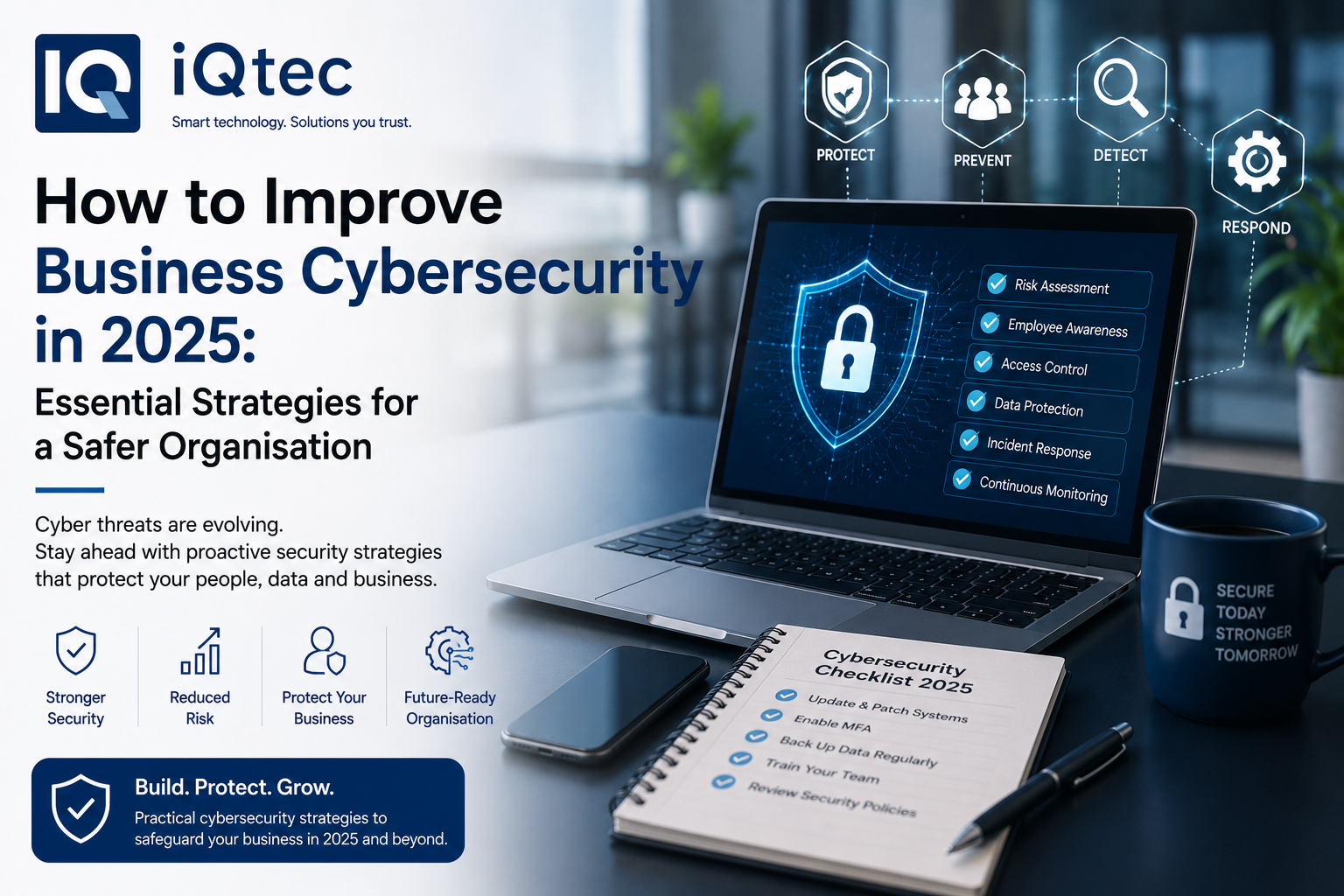
Cybersecurity is no longer just an IT responsibility—it's a critical business priority. As cyber threats become more sophisticated in 2025, organisations of all sizes face increasing risks from ransomware, phishing attacks, data breaches, and insider threats. At the same time, businesses are relying more heavily on cloud services, remote work, and connected devices, creating new opportunities for cybercriminals to exploit vulnerabilities.
Understanding how to improve business cybersecurity in 2025 is essential for protecting sensitive data, maintaining customer trust, and ensuring business continuity. A proactive cybersecurity strategy helps organisations stay ahead of evolving threats while supporting growth and innovation.
Why Cybersecurity Matters More Than Ever
The modern workplace is more connected than ever before. Employees access company systems from multiple devices and locations, while businesses depend on cloud platforms and digital collaboration tools to operate efficiently. Although these technologies improve productivity, they also expand the potential attack surface for cybercriminals.
A successful cyberattack can result in financial losses, operational downtime, reputational damage, and legal or regulatory consequences. Rather than reacting to incidents after they occur, businesses should focus on building a strong security foundation that reduces risk and strengthens resilience.
Conduct Regular Cybersecurity Risk Assessments
The first step in improving cybersecurity is understanding where your vulnerabilities exist. A comprehensive risk assessment identifies weaknesses in networks, devices, applications, and business processes before they can be exploited.
Regular assessments allow businesses to:
- Identify security gaps
- Prioritise high-risk areas
- Evaluate existing security controls
- Develop effective mitigation strategies
By reviewing risks on a regular basis, organisations can adapt their security measures as technology and cyber threats continue to evolve.
Strengthen Identity and Access Management
Compromised user credentials remain one of the leading causes of cyber incidents. Protecting user identities is therefore a key component of business cybersecurity in 2025.
Businesses should implement:
- Multi-Factor Authentication (MFA)
- Strong password policies
- Single Sign-On (SSO)
- Role-based access controls
- Regular user access reviews
These measures ensure employees only have access to the information they need while making it significantly harder for attackers to gain unauthorised access.
Keep Software and Systems Updated
Cybercriminals frequently target known software vulnerabilities that could have been prevented through regular updates. Keeping operating systems, business applications, and security software current is one of the simplest yet most effective cybersecurity practices.
A structured patch management process helps organisations:
- Fix security vulnerabilities quickly
- Improve system performance
- Reduce compatibility issues
- Minimise the risk of exploitation
Automating updates wherever possible can further reduce the likelihood of missed patches.
Invest in Employee Cybersecurity Awareness
Technology alone cannot prevent every cyberattack. Employees play an important role in maintaining a secure workplace, making cybersecurity awareness training essential.
Regular training should help staff recognise:
- Phishing emails
- Social engineering attempts
- Suspicious links and attachments
- Safe password practices
- Secure handling of sensitive information
An informed workforce is often the first line of defence against cyber threats.
Secure Endpoints and Remote Devices
With hybrid and remote work becoming standard, businesses must secure every device that connects to their network. Laptops, smartphones, tablets, and desktops all require consistent security controls.
Effective endpoint protection includes:
- Endpoint Detection and Response (EDR)
- Device encryption
- Remote device management
- Antivirus and anti-malware software
- Automatic security updates
Managing endpoints centrally helps businesses maintain visibility while reducing security risks.
Protect Business Data with Backups
No cybersecurity strategy is complete without reliable backups. Whether caused by ransomware, accidental deletion, or hardware failure, data loss can significantly disrupt business operations.
Organisations should:
- Schedule automatic backups
- Store backups securely
- Test recovery procedures regularly
- Maintain both onsite and cloud backups where appropriate
A strong backup and disaster recovery plan ensures businesses can recover quickly after an incident.
Monitor Networks Continuously
Cyber threats can occur at any time, making continuous monitoring essential. Businesses should monitor networks, servers, cloud environments, and user activity for unusual behaviour that may indicate a security incident.
Continuous monitoring enables organisations to:
- Detect threats early
- Respond faster to incidents
- Reduce potential damage
- Improve overall security visibility
Proactive monitoring is far more effective than waiting until an attack causes noticeable disruption.
Develop an Incident Response Plan
Even organisations with strong security controls should prepare for the possibility of a cyber incident. Having a documented incident response plan helps businesses respond quickly and minimise operational disruption.
An effective response plan should clearly define:
- Roles and responsibilities
- Communication procedures
- Incident containment steps
- Recovery processes
- Post-incident review procedures
Testing the plan regularly ensures employees understand their responsibilities during a security event.
Partner with Cybersecurity Experts
Many small and medium-sized businesses lack the internal expertise required to manage today's complex cybersecurity landscape. Partnering with a managed cybersecurity provider gives organisations access to specialist knowledge, advanced security tools, and continuous monitoring without the cost of maintaining a large in-house security team.
Managed cybersecurity services often include:
- Security assessments
- Vulnerability management
- Threat monitoring
- Compliance support
- Incident response
- Ongoing security advice
This proactive approach allows businesses to stay ahead of emerging threats while focusing on their core operations.
How iQtec Can Help
At iQtec, we help organisations strengthen their cybersecurity through tailored security solutions, proactive monitoring, risk assessments, and ongoing managed IT support. Our team works with businesses to identify vulnerabilities, implement security best practices, and develop strategies that protect critical systems and data.
Whether your organisation needs endpoint protection, cloud security, compliance support, or a complete cybersecurity strategy, iQtec provides practical solutions designed to meet your business needs.
Final Thoughts
Understanding how to improve business cybersecurity in 2025 is essential for organisations looking to protect their operations in an increasingly digital world. Cyber threats continue to evolve, but businesses that adopt a proactive approach to security are better prepared to reduce risks and respond effectively when incidents occur.
By combining strong access controls, regular risk assessments, employee awareness, endpoint protection, continuous monitoring, and expert support, organisations can build a resilient cybersecurity framework that supports long-term business success.
Frequently Asked Questions
1. Why is business cybersecurity important in 2025?
Cyber threats are becoming more advanced, and businesses rely heavily on digital systems. Strong cybersecurity helps protect data, reduce downtime, maintain customer trust, and support business continuity.
2. What is the first step to improving business cybersecurity?
Conducting a cybersecurity risk assessment is the best starting point. It identifies vulnerabilities and helps businesses prioritise security improvements.
3. How often should businesses perform cybersecurity assessments?
Most organisations should perform assessments at least annually, as well as after major infrastructure changes or when new security risks emerge.
4. How does Multi-Factor Authentication improve security?
MFA requires users to verify their identity using multiple authentication methods, making it much harder for attackers to access accounts using stolen credentials.
5. How can iQtec help improve business cybersecurity?
iQtec provides cybersecurity assessments, managed security services, endpoint protection, cloud security, compliance support, continuous monitoring, and expert guidance to help businesses strengthen their overall security posture.